

CACI stock touched a record $689.15 on October 30. The headline catalyst looked ordinary: an earnings beat and a modest guidance raise. The more revealing number sat deeper in the quarterly filing. Technology work now generates 58.6% of CACI’s revenue, while classic “expertise” services contribute 41.4%.
That split matters because the market still files CACI next to government IT contractors. Within six weeks, the company booked a $1.5 billion ceiling award from Central Command. A $281 million Navy electromagnetic warfare order followed. It also holds a $500 million counter-drone contract for homeland defense. A Rochester factory, a $2.6 billion space-sensing acquisition and a Navy shipboard SIGINT program in production complete the picture.
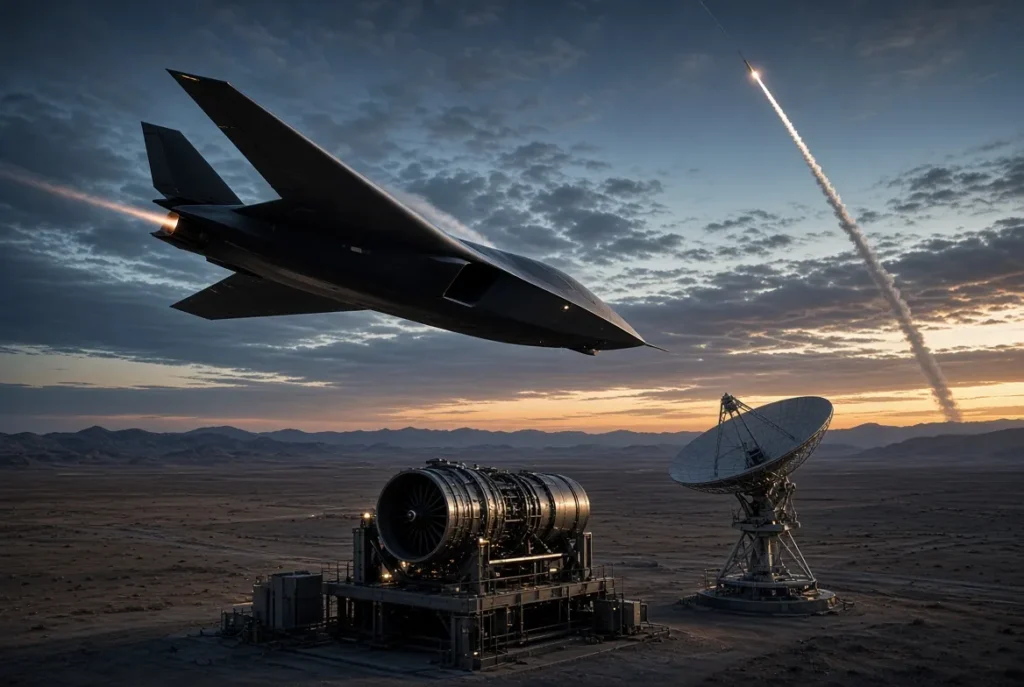
The untold story is not a single contract. CACI has quietly rebuilt itself around the electromagnetic spectrum, space-based sensing and drone defense. Those are the three fronts where modern conflict now concentrates.
Where CACI Stock Stands After the Record
| Indicator | Figure |
|---|---|
| Record high (October 30, 2026) | $689.15 |
| Price (November 2, 2026) | About $677 |
| Market value | About $15 billion |
| Shares outstanding (October 16, 2026) | 22.2 million |
| FY2027 adjusted EPS guidance | $33.18 to $34.08 |
| FY2027 free cash flow guidance | At least $900 million |
| Net debt (September 30, 2026) | About $4.6 billion |
| Analyst target range | $540 to $925 |
At the guidance midpoint, CACI trades near 20 times forward adjusted earnings. Free cash flow guidance implies a yield of about 6% on market value. Analysts remain split. Stifel lifted its target to $925, while BNP Paribas Exane downgraded the shares to Underperform with a $540 target. The debate centers on one question: is CACI a services contractor or a defense technology company?
Six Weeks of Awards Behind the CACI Stock Rally
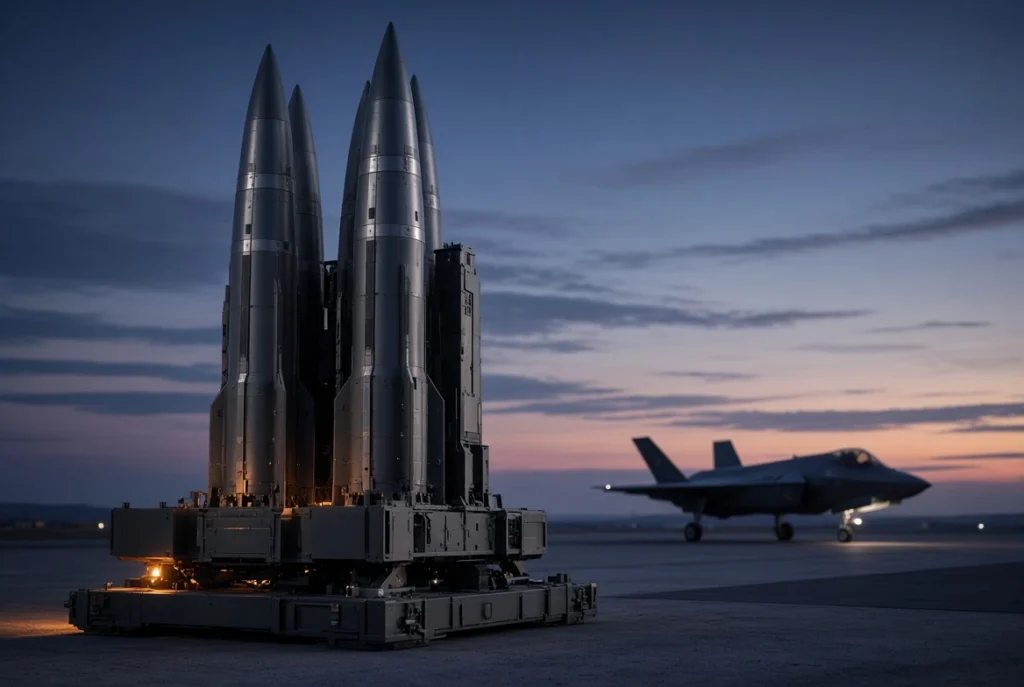
Together, the recent awards trace a military preparing for contested spectrum, persistent drones, and space competition.
| Award | Customer | Value | Mission |
|---|---|---|---|
| Apollo | US Central Command | Up to $1.5B ceiling | Information advantage, irregular warfare |
| Electromagnetic warfare task order | NSWC Crane | Up to $281M | Next-generation EW research and prototypes |
| Domestic Shield C-UAS IDIQ | JIATF-401 | $500M | SkyValor counter-drone production |
| Expeditionary energy task order | Army PM E2S2 | Up to $185M | Field power, GPS-denied airdrop, camouflage |
| Maritime technologies task order | NSWC Carderock | Up to $145M | Autonomy, maritime sensors, prototypes |
| DEAMS modernization | US Air Force | $108M | Financial systems and audit readiness |
| NITE-STAR (1 of 15 awardees) | US Space Force | Up to $981M shared ceiling | Space test and training architecture |
Management reported $4.8 billion of awards in the September quarter, a 2.0x book-to-bill. About 61% came from new business. Funded backlog rose 14.8% to $6.2 billion, even as total backlog stayed near $34 billion. Funded backlog matters more here, because Congress has already appropriated that money.
The geography of these awards stands out. CENTCOM oversees the Middle East, where the US has fought Operation Epic Fury this year. Crane and Carderock serve a Navy focused on the Western Pacific. The Army order targets operations without reliable GPS or supply lines. Each award reflects a specific lesson from current conflicts, not generic IT spending.
Ceilings deserve caution, however. The $1.5 billion Apollo figure marks a maximum over one base year and four options. Actual revenue depends on task orders that CENTCOM funds over time. Apollo applies AI-enabled analysis to planning and information integration across a volatile region. That work draws on CACI’s irregular warfare experience with other combatant commands. Ceiling values signal access, not guaranteed revenue.
The Electromagnetic Spectrum as Strategic Terrain
Ukraine and the Middle East have shown that whoever controls radio frequencies controls drones, communications, and targeting. CACI built its position here through acquisitions. It bought Azure Summit Technology for $1.275 billion, closing in October 2024. Azure Summit designs radio-frequency hardware and software for electronic warfare and signals intelligence.
The Navy SPECTRAL program shows that strategy reaching production. In March 2026, CACI’s shipboard SIGINT and EW system reached Milestone C. That milestone opens low-rate initial production and deployment. The October Crane award extends the pipeline into next-generation electromagnetic warfare prototypes.
The business model shifts with this work. Software-defined systems let the Navy update threat libraries without replacing hardware. CACI earns from the initial hardware, the software and the upgrades that follow. Program-of-record status turns CACI from a contractor into a long-term supplier inside the force structure.
Rochester and the Onshoring of Defense Electronics
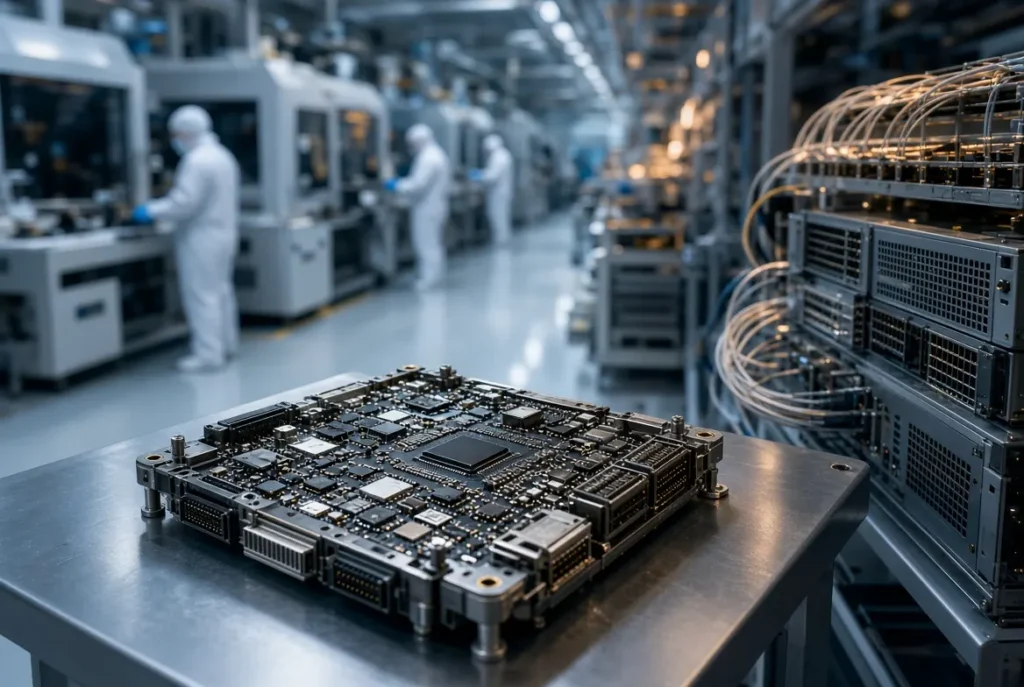
In August, CACI opened a 61,000-square-foot defense electronics center in Rochester, New York. The site expands its manufacturing space by more than 300%. It builds software-defined EW systems, including the Army’s TLS BCT Manpack for dismounted soldiers.
This is more than capacity. Pentagon buyers increasingly favor domestic production for sensitive electronics. A US factory with test and acceptance facilities shortens delivery and reduces foreign supply exposure. Management flagged one limit on the earnings call, however. Memory, semiconductors, and rare earths face high inflation and long lead times. Much of the rare-earth supply chain still runs through China’s processing dominance.
When the Drone War Comes Home
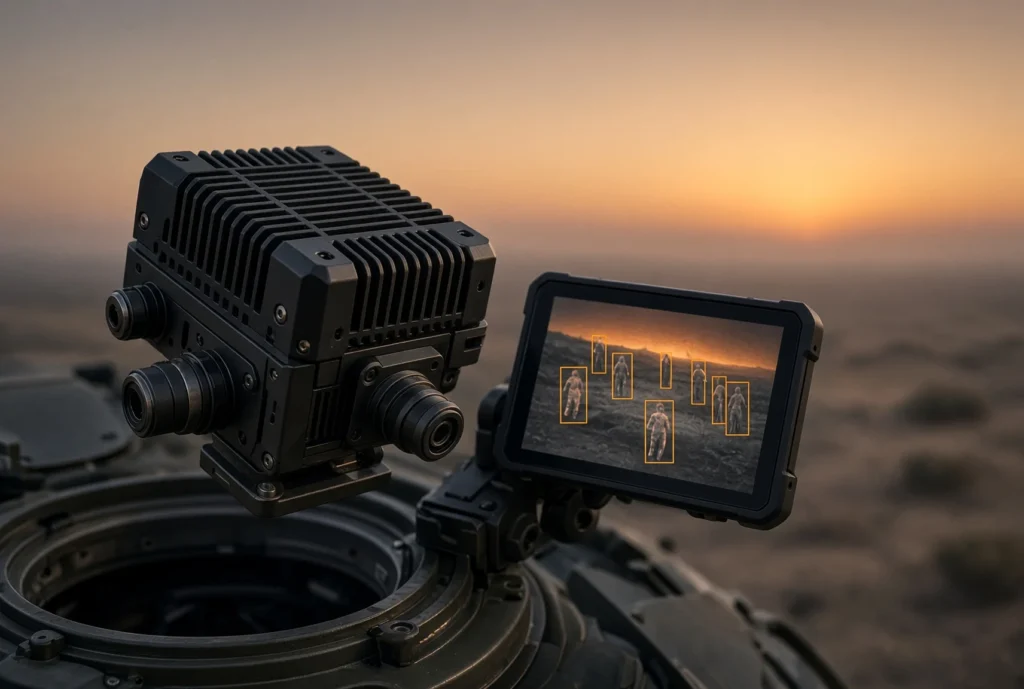
The most overlooked contract may be the smallest in headlines. In July, Joint Interagency Task Force 401 awarded CACI a three-year, $500 million counter-drone IDIQ. SkyValor, CACI’s system, detects, tracks, and defeats hostile drones, including cellular-enabled models. Management said SkyValor has moved into full-rate production.
The policy backdrop changed fast. Until December 2025, only federal agencies held authority to defeat drones domestically, according to CSIS. The SAFER SKIES Act then extended that power to trained state and local officers. During this year’s World Cup, DHS logged 145 drone incursions across eight venues in the opening days.
JIATF-401 has committed more than $600 million to counter-drone capability this year. That spending covers combat needs, the World Cup, and a Domestic Shield effort for defense critical infrastructure. Homeland drone defense has become a standing budget line, not a one-off event cost.
The competitive field remains crowded. Defense primes, startups and drone component suppliers all chase the same budgets. CACI’s background lies in radio-frequency sensing and electronic warfare, not kinetic interceptors. Non-kinetic tools suit populated areas, where falling debris carries more risk.
Space: The $2.6 Billion Bet Few Investors Discuss
In March 2026, CACI closed its $2.6 billion all-cash acquisition of ARKA Group from Blackstone funds. ARKA builds electro-optical, infrared, and hyperspectral sensors for space, plus geospatial intelligence software. More than 1,100 employees joined CACI.
The deal positions CACI on the sensing side of space, not the launch side. The Space Force selected CACI as one of 15 vendors on its NITE-STAR test and training contract. Management also cited a selection to supply optical imaging payloads for Vantor’s commercial satellite fleet. Space-based sensing links directly to missile warning and targeting, central themes in current Pentagon planning. Investors following space infrastructure names rarely include CACI in that group.
The acquisition carries a cost. Net leverage reached 3.5 times EBITDA, and management expects it to return to the low threes by March 2027. Space sensing adds a growth engine, but it also ties up the balance sheet for now.
What the Patent Record Means for CACI Stock
Research on CACI often credits it with a deep patent wall in optical communications. The public record tells a different story. Patent US 6,411,414, often cited, names Lucent Technologies as assignee and dates from 1998. Patent US 10,003,402 traces to MIT, under an Air Force contract.
CACI’s own filings form a smaller portfolio. Patent analytics site GoodIP lists about 30 applications for CACI, Inc.-Federal. Titles include compact free-space communication and passive monitoring of drone communications. That second filing sits in the same field as SkyValor.
| IP or capability | Holder | Relevance to CACI |
|---|---|---|
| US 6,411,414, WDM wireless optical link | Lucent Technologies (1998 filing) | Not a CACI moat; likely expired |
| US 10,003,402, optical ground terminal | MIT, Air Force-funded | Not a CACI patent |
| Passive UAV communications monitoring (application) | CACI, Inc.-Federal | Supports RF-based counter-drone |
| Compact free-space communication (application) | CACI, Inc.-Federal | Optical links for contested areas |
| Security clearances and accredited production | CACI | Barrier competitors cannot patent |
Patents play a limited role in defense electronics. The government often retains rights to inventions it funds. The durable moat lies elsewhere: cleared engineers, accredited facilities, classified data access and positions on programs of record. For CACI stock, trust and clearances matter more than patent counts.
Revenue Mix, Governance and the Rerating Question
The quarterly 10-Q filing shows where CACI earns its money.
| Segment | Share of Q1 FY2027 revenue |
|---|---|
| Department of War (DoD) | 54.7% |
| Intelligence Community | 24.7% |
| Federal civilian agencies | 16.0% |
| Commercial and international | 4.5% |
| Cost-plus contracts | 52.8% |
| Fixed-price contracts | 33.2% |
| Time-and-materials contracts | 14.0% |
Fixed-price work at a third of revenue gives CACI room to profit from efficiency. EBITDA margin rose to 13.3% from 11.7% a year earlier. Organic growth, however, reached only 2.1%, with acquisitions supplying most of the 8.2% headline growth.
Intelligence Community work, nearly a quarter of revenue, adds a quieter advantage. Classified programs rarely change hands, because rivals need cleared staff and accredited facilities. Management says about 94% of FY2027 revenue already comes from existing programs. That stickiness supports visibility, even when new awards slow.
The board reflects the strategy. Chair Lisa Disbrow served as Under Secretary of the Air Force. Former Chief of Naval Operations Michael Gilday joined in January 2026. Former Army Secretary Ryan McCarthy also sits on the board. That experience helps CACI read requirements across services. It also invites scrutiny of revolving-door ties.
Peers frame the valuation debate. Analysts usually compare CACI with Leidos and other government services firms. Electronic warfare specialists such as L3Harris command richer multiples. CACI sits between those groups.
| Scenario | Driver | Implication for CACI stock |
|---|---|---|
| Rerating | Organic growth accelerates as EW, C-UAS and space programs ramp | Multiple moves toward defense technology peers |
| Steady | Growth tracks guidance; leverage falls on schedule | Returns follow earnings growth |
| Pressure | Budget delays, supply inflation or integration missteps | Multiple compresses toward services peers |
These scenarios reflect our judgment, not company guidance. A rerating likely needs proof of faster organic growth, not more acquisitions.
The Risks That Matter for CACI Stock
- Budget timing. A continuing resolution runs to December 11, and awards remain “sluggish in some areas.”
- Leverage. Net debt near $4.6 billion leaves less room for new deals.
- Organic growth. Q1 organic growth reached only 2.1%.
- Supply chain. Memory, chips and rare earths face inflation and long lead times.
- Integration. ARKA and Azure Summit must deliver on their purchase prices.
- Reporting change. CACI moves to a calendar fiscal year, with a transition period through December 31, 2026.
- Valuation dispersion. Analyst targets span $540 to $925.
Closing Thoughts
CACI has spent two years buying and building capabilities aligned with where conflict is heading. Azure Summit added spectrum hardware, ARKA added space sensing, and Rochester added domestic production. SkyValor took the drone fight to American stadiums and bases.
The market has noticed the record price, but not fully the new identity. Organic growth, leverage, and supply inflation still argue for caution. In our view, the early 2027 investor day will test whether the numbers confirm that shift. CACI stock now prices a better services company; the open question is whether it becomes a technology prime.
Sources
- CACI Q1 FY2027 Form 10-Q (SEC)
- CACI: Fiscal 2027 first quarter results
- Motley Fool: CACI Q1 FY2027 earnings call transcript
- CACI: Apollo award for US Central Command
- CACI: Navy electromagnetic spectrum task order
- CACI: $500M C-UAS IDIQ for JIATF-401
- CACI: $185M Army expeditionary power task order
- CACI: $145M Navy maritime technologies task order
- CACI: $108M Air Force DEAMS award
- CACI: Space Force NITE-STAR selection
- CACI: Rochester manufacturing center
- CACI: ARKA acquisition completed (SEC Form 8-K)
- CACI: Azure Summit acquisition completed
- I-Connect007: SPECTRAL reaches Milestone C
- Business Wire: CACI appoints Michael Gilday and David Keffer
- JBSA: JIATF 401 commits more than $600 million to counter-UAS
- CSIS: Counter-drone defense and the 2026 World Cup
- Barchart via Yahoo Finance: Next-gen defense stock at all-time highs
- MarketBeat: CACI hits new 12-month high
- Justia Patents: US 6,411,414
- MIT TLO: Ground terminal for direct-to-earth optical communications
- GoodIP: CACI, Inc.-Federal patent portfolio
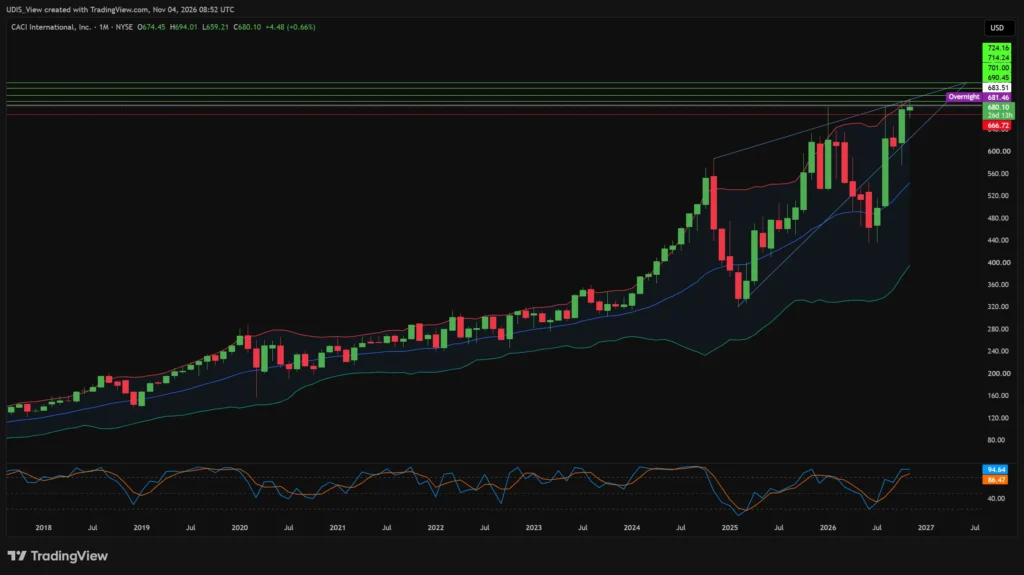
CACI Long (Buy)
Enter At: 683.51
T.P_1: 690.45
T.P_2: 701.00
T.P_3: 714.24
T.P_4: 724.16
S.L: 666.72