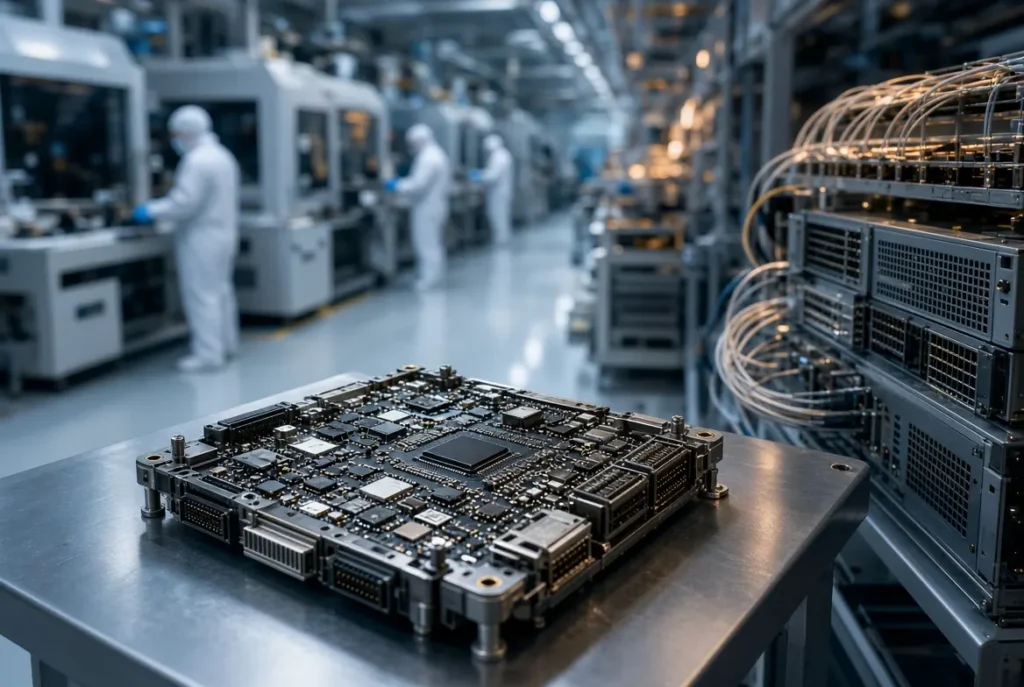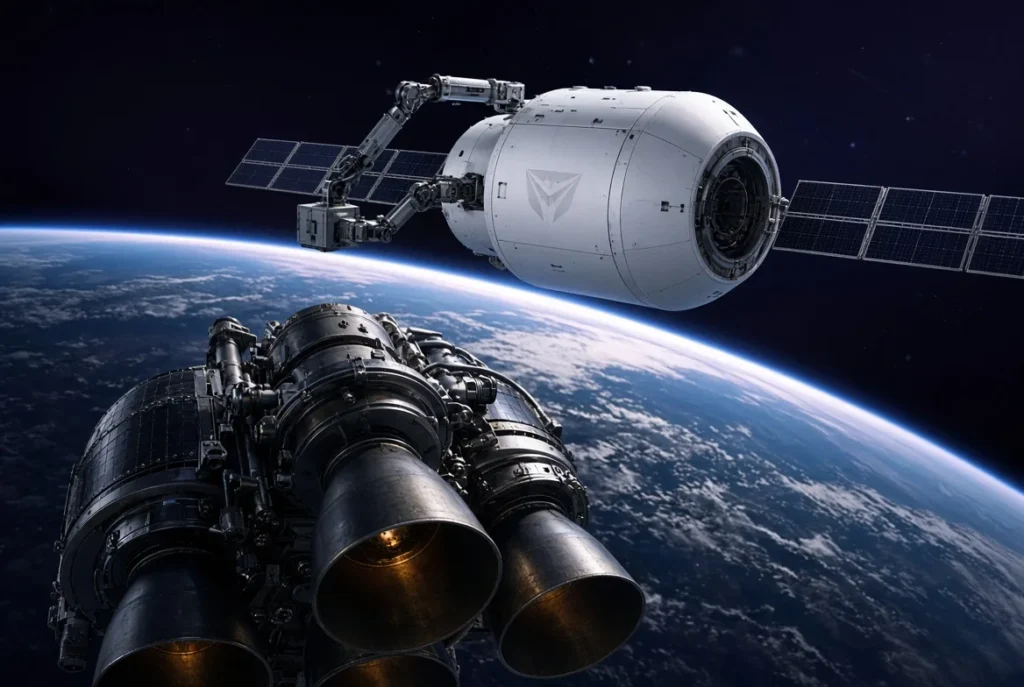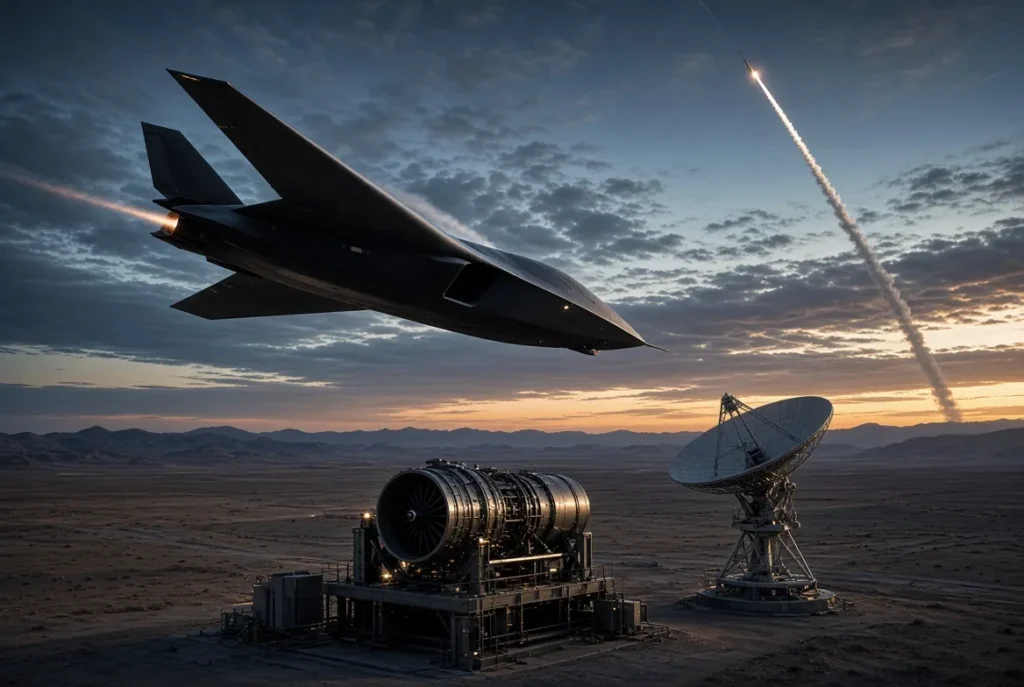

Alphabet just executed the largest equity raise in its history, and most of the tape misread the signal. The $84.75 billion the company priced on June 2, 2026, was not a defensive scramble for cash. It split across a $30 billion underwritten offering, a $40 billion at-the-market program, and a $10 billion Berkshire Hathaway @BRKB private placement that anchored the book. This is the down payment on a vertical AI empire now spanning advertising, the cloud, drug design, humanoid robotics, clean power, and a slice of the most valuable IPO ever staged.
The Competitive Moat
Alphabet’s durable edge no longer lives in search. It lives in proprietary models rivals cannot replicate at any price. Two breakthroughs anchor that claim.
Start with biology. Isomorphic Labs, the DeepMind spinout, closed a $2.1 billion Series B on May 12, 2026, led by Thrive Capital with Alphabet, MGX, Temasek, and CapitalG. The asset behind that round is IsoDDE, the Isomorphic Drug Design Engine. Built on AlphaFold, the Nobel-winning system that mapped over 200 million protein structures, IsoDDE compresses target-to-candidate timelines from years toward months. Live partnerships with Eli Lilly @LLY, Novartis, and Johnson & Johnson already validate the platform commercially, and first human trials are now in sight. This positions Alphabet directly in the 2026 race to industrialize gene-based medicine, where computational design is collapsing discovery costs. Alphabet is seeding the next layer too. In May, it committed $10 million through REPLIQA, a Google Quantum AI program pairing quantum simulation with five universities to model molecular interactions classical machines cannot. That is a long-dated option on quantum-enhanced discovery.
The second breakthrough moves AI off the screen and onto the factory floor. DeepMind now deploys Gemini foundation models on humanoid hardware through Agile Robots, Boston Dynamics, and Apptronik. Each deployment feeds real-world interaction data back into the models. That is a compounding flywheel competitors cannot match without comparable fleets in the field. These models sit behind a hardening patent wall, with recent filings concentrated on neural architecture search and AI compilers, claims built to survive a tightening USPTO bar on abstract AI. The moat is not just data. It is defensible intellectual property.
Strategic Alliance
Alphabet’s most underpriced asset is not parked on the balance sheet as cash. It is a 2015 venture bet now worth more than $100 billion. SpaceX @SPCX priced its IPO at $135 on June 11, 2026, valuing the company near $1.77 trillion, the largest listing on record. Shares closed the debut session around $161, a roughly 19% pop. Alphabet paid about $900 million in 2015 for a position now near 5% after the xAI merger diluted the original 6.11% holding. That stake is worth roughly $105 billion today.
The alliance runs far deeper than equity. Google pays SpaceX $920 million a month for AI compute through June 2029, a contract worth about $30 billion, running alongside Anthropic’s $1.25 billion monthly commitment. Alphabet money feeds SpaceX revenue, and SpaceX equity feeds Alphabet’s war chest. Crucially, staggered post-lockup share sales can convert into infrastructure cash without diluting Alphabet holders.
Financial Health & Valuation
The Q1 2026 print exposed the central tension in this story. Record profit collided with collapsing free cash flow.
| Metric | Value | Annual Change |
|---|---|---|
| Q1 2026 Revenue | $109.9B | +22% |
| Google Cloud Revenue | $20.0B | +63% |
| Net Income | $62.6B | +81% |
| Q1 2026 CapEx | $35.7B | +107% |
| TTM Free Cash Flow | $64.4B | -47% (Q1 YoY) |
| Cloud Backlog | $462B | ~2x QoQ |
Net income jumped 81% to $62.6 billion, but roughly $28.7 billion of that came from unrealized equity-security gains, not operations. Strip the windfall out, and the story is capex. Capital expenditures hit $35.7 billion in the quarter, up 107% year over year, with full-year 2026 guidance of $180 billion to $190 billion. Total debt has quadrupled past $100 billion since early 2025. Trailing operating cash flow reached $174.4 billion, yet free cash flow fell to $64.4 billion, and analysts expect 2026 margins to compress sharply as the buildout peaks. This is the same energy and capital crunch now reshaping AI economics across the sector.
Alphabet is engineering that buildout to defend both margins and political cover. On June 15, it committed $1.5 billion to expand its Jackson County, Alabama campus, built on a retired coal plant site. Under the White House Ratepayer Protection Pledge, Google funds 100% of its own power, shielding local rates. A 2025 deal with Kairos Power and the TVA routes up to 50 megawatts of advanced nuclear toward its Southern data centers next decade, part of the broader pivot toward small modular reactors built for AI demand. The bull case treats $462 billion of cloud backlog as the payback. The bear case treats compute as a commoditizing liability.
Risk Factors
Two risks could break the thesis, and neither is priced for comfort.
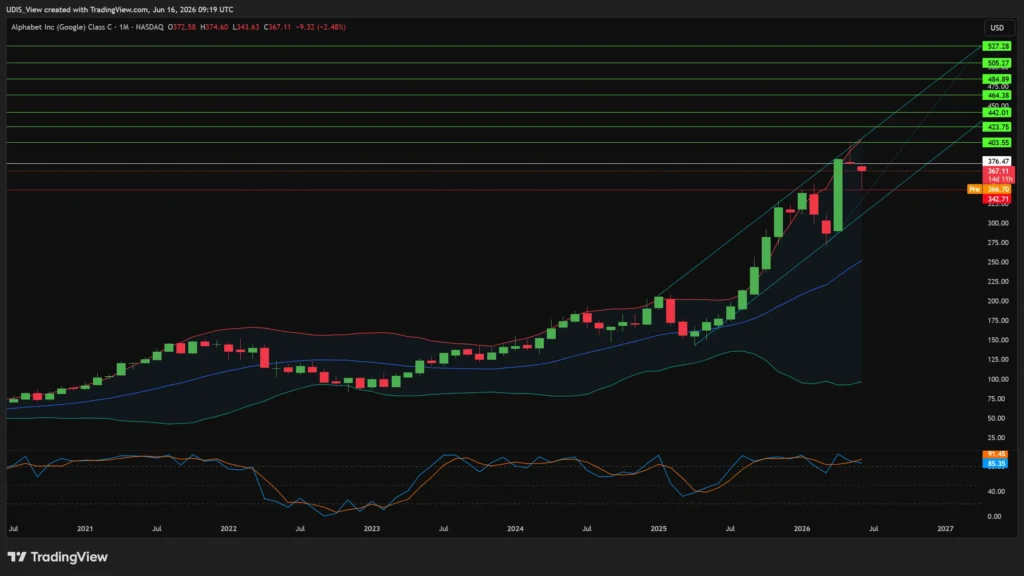
First, leverage meets margin compression. The company is now funding a $190 billion capex year while free cash flow contracts and debt sits above $100 billion. If cloud backlog conversion slows, leverage that looks prudent today turns punitive fast. The stock has already fallen for several straight weeks in June, posting a peak-to-trough drop above 12%.
Second, geopolitical exposure is escalating. The $1.2 billion Project Nimbus cloud contract with the Israeli government, shared with Amazon, has triggered sustained backlash. Roughly 200 Stanford students protested Sundar Pichai’s June commencement address, and graduates staged an organized walkout. Ethical disputes now threaten engineering recruitment and complicate enterprise relationships across Europe and Asia. The lesson is familiar to anyone tracking whether an AI moat can outlast a sudden geopolitical shock: technical dominance does not immunize a balance sheet from politics.
The Bottom Line
Watch the SpaceX lockup. Staggered unlocks beginning in the back half of 2026 could free an estimated $18 billion to $21 billion in non-dilutive cash, the first hard proof that Alphabet can self-fund its AI buildout. Pair that with $462 billion in contracted cloud demand, a drug-design engine advancing toward human trials, and a self-funded nuclear power roadmap, and the thesis sharpens. Alphabet is no longer an advertising business hedging into AI. It is an AI conglomerate monetizing across atoms, cells, and orbit. The capex is the risk. The moat is the reason to own it.
Sources
- CNBC, cnbc.com
- National Public Radio (NPR), npr.org
- PR Newswire, prnewswire.com
- The Guardian, theguardian.com
- Reuters, reuters.com
Google Long (Buy)
Enter At: 376.47
T.P_1: 403.55
T.P_2: 423.75
T.P_3: 442.01
T.P_4: 464.38
T.P_5: 484.89
T.P_6: 505.27
T.P_7: 527.28
S.L: 342.71