

1. Introduction and Q1 Financial Results
Northrop Grumman reported exceptional first-quarter financial results recently. The corporation achieved a robust $6.14 earnings per share. This $6.14 figure easily surpassed Wall Street consensus estimates predicting $6.03. Simultaneously, quarterly revenue climbed to $9.88 billion for Northrop Grumman. The revenue jump represents a steady 4.4 percent year-over-year increase. Despite strong fundamental performance, Northrop Grumman stock plummeted nearly seven percent.
Investors reacted negatively to flat full-year financial guidance from management. The executive team reaffirmed rather than raised future financial targets. Consequently, the cautious approach disappointed highly optimistic equity market participants. Market participants currently prioritize future guidance updates over past operational execution. The broader defense sector faces similar valuation scrutiny today. Therefore, strong financial releases often trigger immediate profit-taking among institutional holders.
Table 1: Q1 2026 Financial Performance Data
| Metric | Reported Figure | Market Context |
| Earnings Per Share | $6.14 | Surpassed $6.03 consensus |
| Quarterly Revenue | $9.88 Billion | 4.4% year-over-year growth |
| Stock Price Reaction | -7.0% decline | Driven by flat guidance |
2. Cash Flow, Shareholder Returns, and Valuation Context
Financial analysts monitor corporate cash flow metrics with intense scrutiny. Northrop Grumman experienced notable first-quarter cash usage recently. Specifically, the company took a $71 million charge related to the Vulcan booster. The Space Systems segment recorded the specific unfavorable program adjustment. These short-term capital expenditures drag on immediate quarterly profitability. However, management demonstrates a fierce commitment to robust shareholder returns.
Northrop Grumman generated $3.3 billion in free cash flow previously. Corporate leadership returned over 100 percent of the cash to investors. They utilize aggressive share buybacks and consistent quarterly dividends effectively. A recently declared $2.31 quarterly dividend provides reliable income baselines. Reducing outstanding share counts drives long-term earnings per share outperformance. Ultimately, the strategic balance between internal investment and shareholder returns remains incredibly strong.
3. Geopolitical Catalysts and War Premium Dynamics
The defense market reacts sharply to shifting global geopolitical narratives. A proposed ceasefire between the United States and Iran triggered massive sell-offs. The market immediately erased the speculative war premium on defense equities. Investors quickly rotated capital into civilian airlines and consumer technology stocks. A peaceful resolution inherently reduces immediate demand for advanced tactical munitions. Consequently, algorithmic trading often misinterprets long-term national security fundamentals completely.
The short-term market reaction ignores absolute strategic defense imperatives entirely. Northrop Grumman boasts a massive $95.7 billion defense contract backlog. This incredible backlog ensures immense revenue visibility for several coming years. Fundamental deterrence requirements remain completely unchanged by temporary geopolitical truces. Great Power Competition requires sustained capital investments from global governments. Therefore, Wall Street analysts currently project a consensus price target near $693.60.
4. Macroeconomic Pressures and Inflation Risks
Fixed-price contracts dominate the current aerospace and defense procurement landscape. These rigid structures account for nearly fifty percent of total corporate sales. They transfer significant financial risk directly to the prime defense manufacturer. Rampant inflationary pressures compress profit margins on long-term engineering projects. Severe supply chain bottlenecks exacerbate cost overruns across the defense sector. Furthermore, specialized component shortages halt assembly lines and delay weapon deliveries.
Northrop Grumman recognized painful learning curve provisions during recent fiscal quarters. The provisions directly impacted earnings on sensitive fixed-price development contracts. Management currently targets segment operating margins near 11.5 percent for the year. Achieving the 11.5 percent metric requires flawless operational execution. The firm utilizes advanced supply chain agility to mitigate macroeconomic risks. Ultimately, executing long-term defense contracts requires robust domestic manufacturing capabilities.
Table 2: Economic Risk Factors and Mitigation Strategies
| Economic Risk Factor | Financial Impact | Corporate Mitigation Strategy |
| Inflationary Pressures | Margin compression on fixed-price builds | Supply chain hedging and material purchasing |
| Skilled Labor Shortages | Production delays and wage inflation | Automated robotics and factory modeling |
| Restrictive Tariff Policies | Increased raw material import costs | Domestic sourcing and localized manufacturing |
| Fixed-Price Contracts | Corporate absorption of sudden cost overruns | Rigorous milestone tracking and agile engineering |
5. Aeronautics (B-21 Raider Maturation)
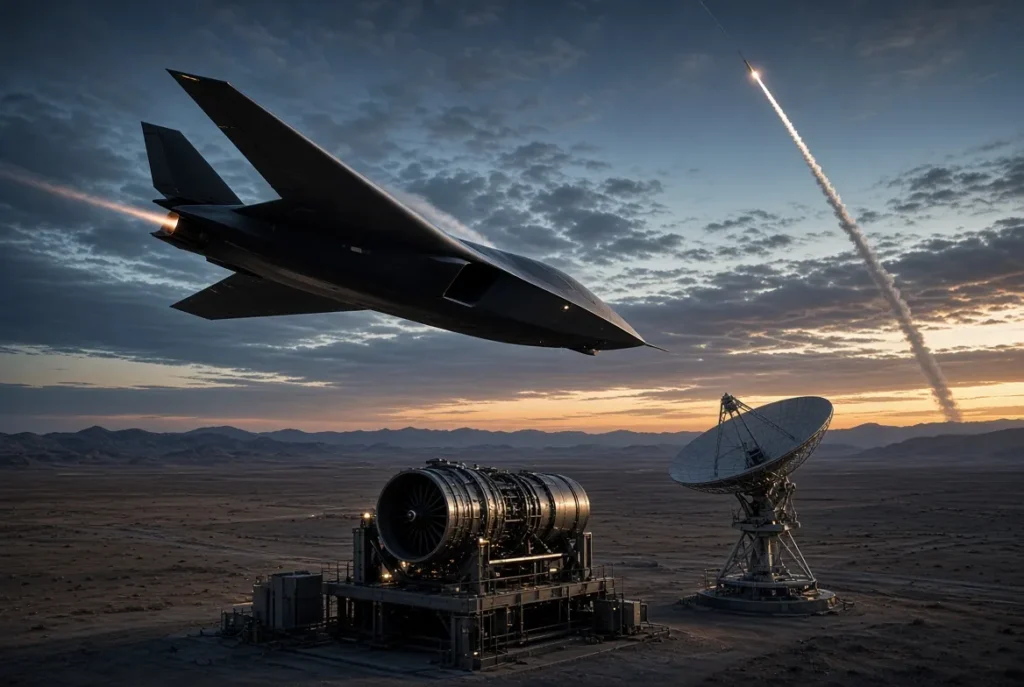
The B-21 Raider program firmly anchors the strategic aeronautics business segment. The advanced stealth bomber currently represents approximately ten percent of total revenue. Production volume acceleration will inevitably push the B-21 Raider revenue share higher. Northrop Grumman recently executed a highly strategic military aircraft sale. The company sold a test prototype directly to the United States Air Force. The unprecedented transaction accelerates the overall fleet delivery schedule significantly.
A massive government agreement funds a crucial B-21 Raider capacity increase. A $4.5 billion investment boosts annual output capabilities significantly for Northrop Grumman. Production velocity will expand by roughly twenty-five percent very soon. The Department of Defense officially awarded Lot 3 and Lot 4 manufacturing contracts. The company invests $2.5 billion into advanced facilities simultaneously. The expanding backlog provides massive, multi-decade revenue visibility for equity investors.
Table 3: B-21 Raider Production Expansion Metrics
| Production Metric | Strategic Value | Financial Implication |
| Revenue Share | 10% of total revenue | Drives segment growth as volume scales |
| Government Award | $4.5 Billion investment | Boosts annual output capacity by 25% |
| Internal Investment | $2.5 Billion corporate funding | Expands Palmdale manufacturing facilities |
6. Strategic Nuclear Programs (Sentinel)
The Sentinel ICBM program faces intense ongoing political and financial scrutiny. A massive Nunn-McCurdy cost breach occurred during recent fiscal program evaluations. Rampant inflation and complex silo engineering drove total project costs upward rapidly. The Air Force is currently restructuring the entire acquisition program completely. A critical Milestone B decision is actively expected by late 2026. Resolving the structural cost issues remains paramount for long-term shareholder value.
Sentinel ICBM execution remains absolutely crucial for long-term corporate revenue moats. Eliminating further cost overruns will stabilize jittery institutional investor confidence. Success secures decades of lucrative command-and-control infrastructure maintenance contracts. The new system entirely replaces aging Minuteman III intercontinental ballistic missiles. The Sentinel ICBM accelerates momentum toward comprehensive national strategic deterrence goals. The strategic necessity of the program virtually guarantees continued federal support.
7. Autonomous and Uncrewed Systems
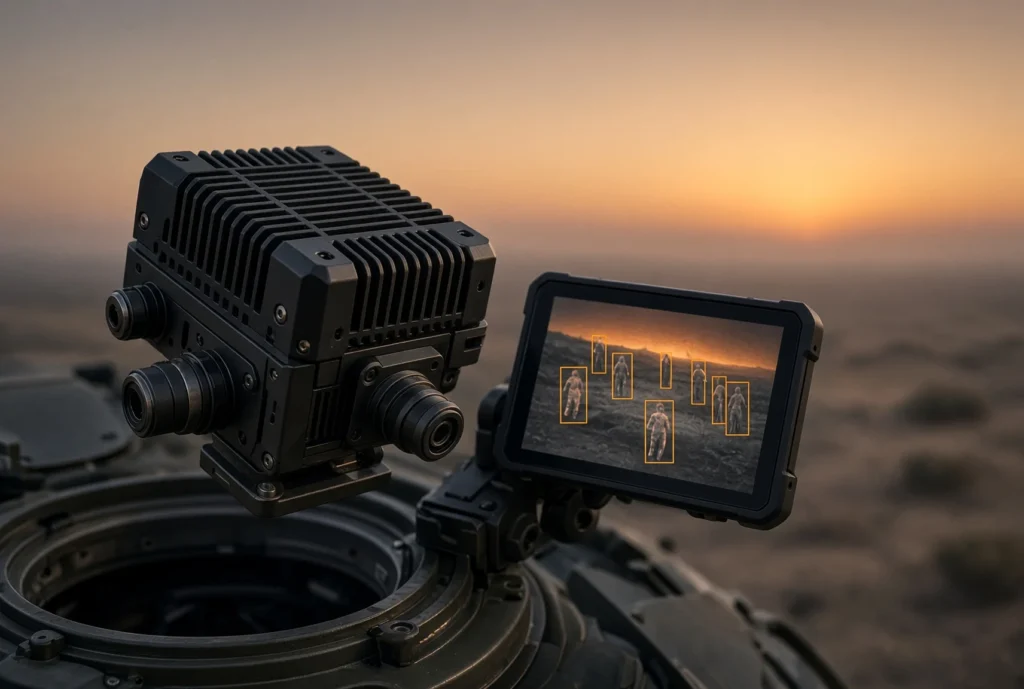
Autonomous systems currently dominate modern tactical military procurement strategies entirely. The Lumberjack drone exemplifies the radical technological shift toward uncrewed combat. Commanders deploy the Lumberjack drone aggressively without risking expensive stealth fighter aircraft. Software integration acts as the true force multiplier for autonomous drones. This trend drives growth across autonomous defense stocks in 2026. The Talon IQ successfully swapped complex autonomy software skills mid-flight during testing.
The military integrates the Lumberjack drone directly into the Maven Smart System. Palantir provides the underlying artificial intelligence architecture for the integrated network. This artificial intelligence capability empowers commanders to overwhelm enemy air defenses. The Department of Defense recently raised Palantir’s Maven contract over $1B. Northrop Grumman drones integrate seamlessly into the digital command infrastructure. The deep integration creates incredibly sticky revenue streams for the company.
Table 4: Autonomous Platform Comparison
| Autonomous Platform | Classification | Primary Mission Profile | Key AI Integration |
| Lumberjack | Group 3 UAS | Precision kinetic strike and ISR surveillance | Maven Smart System |
| Talon IQ | Experimental UAS | Adaptable combat autonomy and flight modeling | Applied Intuition & Accelint |
| MQ-4C Triton | HALE UAV | High-altitude maritime intelligence and tracking | Advanced Sensor Fusion |
8. Space Logistics and International Expansion
Space logistics capabilities expand rapidly to meet rising commercial orbital demands. The recent NG-24 mission successfully launched the massive Cygnus XL spacecraft. The Cygnus XL offers 33 percent more payload capacity than predecessor models. The international commercial space sector provides massive long-term financial growth opportunities. Hungary aggressively pursues sovereign space infrastructure and total orbital communication independence. Hungary partnered directly with Northrop Grumman to construct the HUGEO satellite.
The international contract holds a total value exceeding several hundred million dollars. The agreement expands the company’s strategic European government footprint considerably. The partnership lessens corporate financial dependence on strictly domestic United States budgets. Successful deployment proves the viability of exporting sensitive American space technology. Expanding international partnerships insulates Northrop Grumman against unpredictable American political budget cycles. The European defense market presents massive growth potential amid regional instability.
Table 5: Cygnus Spacecraft Variant Specifications
| Variant | Dry Mass | Payload Capacity | Pressurized Volume |
| Standard PCM | 1,500 kg | 2,000 kg | 18.9 m³ |
| Enhanced PCM | 1,800 kg | 3,500 kg | 27.0 m³ |
| Cygnus XL | 2,300 kg | 5,000 kg | 36.0 m³ |
9. Microelectronics, Cyber, and Patent Moat
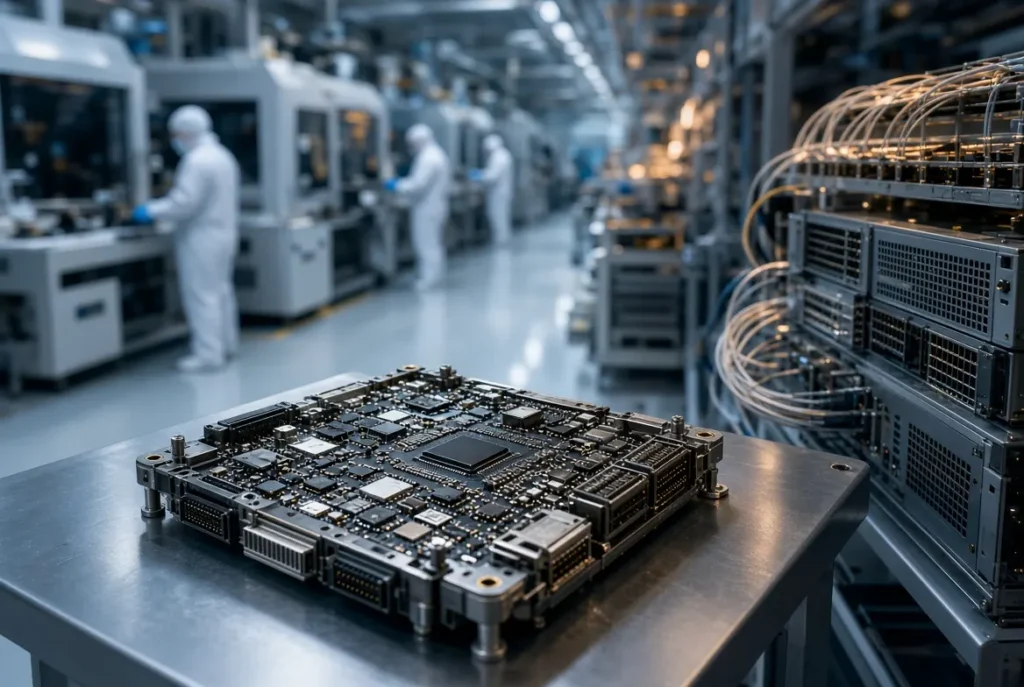
Lab-grown diamonds represent a monumental materials science breakthrough for defense electronics. Engineers now utilize diamonds for highly sensitive radio-frequency receiver protection. Diamonds conduct raw heat five times more efficiently than standard copper. A massively robust patent portfolio protects future corporate revenue streams. The company actively holds 11,109 officially registered patents globally today. More than 6,465 of the registered patents remain legally active currently.
Northrop Grumman recently secured a massive contract for electronic warfare systems. The United States Navy awarded a $334.4 million contract modification. The funds finance the production of additional SEWIP Block 3 systems. The SEWIP Block 3 system provides non-kinetic electronic attack capabilities. The hardware jams enemy radar and disrupts incoming missile guidance systems effectively. Investors should view SEWIP Block 3 electronic warfare as a defensible revenue moat.
Table 6: Key Patent Domain Highlights
| Key Patent Domain | Core Innovation | Strategic Application |
| Solid-State LiDAR | Spiral phase plate resonators | Autonomous drone navigation and targeting |
| Cyber Defense | Probability score modeling | Infrastructure threat detection and analysis |
| Quantum Sensing | Reciprocal Quantum Logic gates | High-speed cryptographic data processing |
| Materials Science | Diamond RF receiver protection | Radar hardening against directed energy attacks |
10. Investment Outlook and Risks
Short-term market fluctuations frequently obscure underlying structural defense industry growth. Northrop Grumman commands an absolutely dominant position in aerospace technology. The fundamental global deterrence requirements remain completely unchanged and urgent. The massive $151 billion SHIELD missile defense backlog provides a rigid valuation floor. The deterrence super-cycle ensures massive, long-term shareholder value creation ultimately. The recent stock decline represents a highly compelling entry point for capital.
Defense market implications rely on robust project execution moving forward.
- Key Investment Drivers:
- The B-21 Raider transitions into high-margin volume production rapidly.
- Autonomous systems capture recurring artificial intelligence software revenue globally.
- The Cygnus XL secures profitable commercial space delivery contracts reliably.
- Patent portfolio monetization expands free cash flow generation significantly.
- Risks Investors Should Monitor:
- Inflationary pressures squeeze fixed-price contract margins continuously.
- Potential Sentinel ICBM budget cuts follow recent Nunn-McCurdy breaches directly.
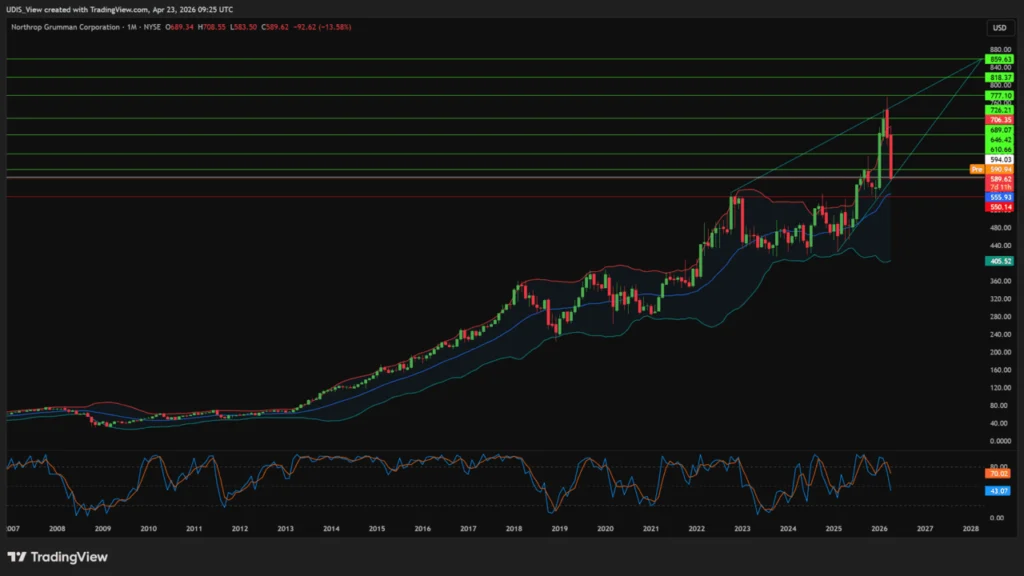
Northrop Grumman Long (Buy)
Enter At: 594.03
T.P_1: 610.66
T.P_2: 646.42
T.P_3: 689.07
T.P_4: 726.21
T.P_5: 777.10
T.P_6: 818.37
T.P_7: 859.63
S.L: 550.14